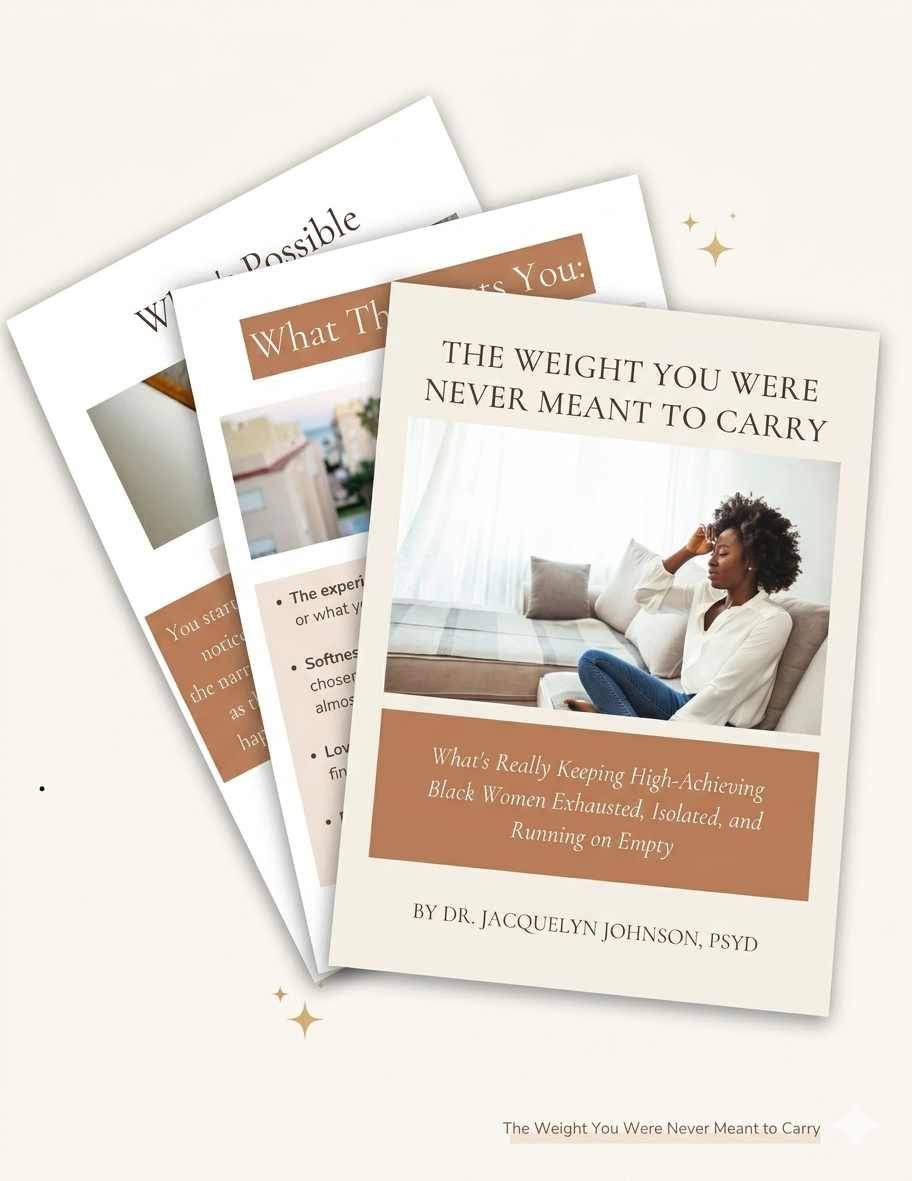
The top 10 anxiety symptoms in Black women in the corporate workplace
When strength starts to feel heavy
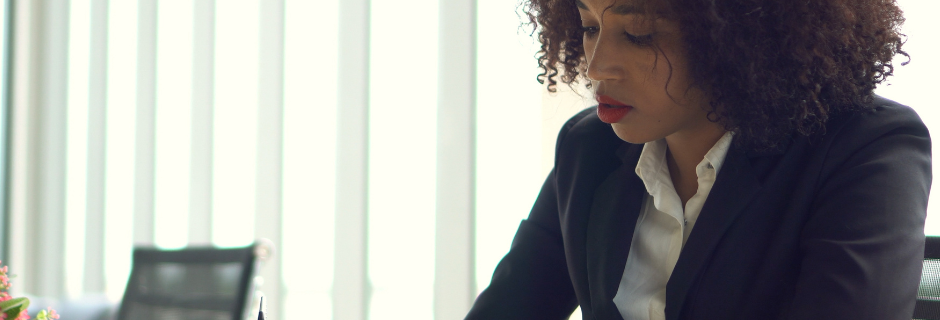
It is 9 p.m. and the office is almost empty. You stare at your screen, trying to finish one more email, one more task, one more proof that you are still in control. The heels are off under the desk, your shoulders ache, and your smile from earlier feels like a mask that forgot to come off.
You whisper a quiet prayer under your breath. Not for promotion this time, not for recognition. Just for rest. For the peace that never seems to last past the morning meeting.
You have built a life defined by excellence. You have learned to hold yourself to impossible standards because somewhere along the way, strength became your survival. But what happens when the strength that built your success becomes the weight that keeps you from breathing?
That quiet, restless tension is where anxiety begins for so many high achieving Black Christian women in corporate spaces. It rarely looks like panic. It looks like over preparation. It looks like pushing through exhaustion. It looks like smiling when your body is begging you to stop.
In case we have not met yet, I am Dr. J , founder and therapist at Deeply Seen Psychological Services. I help high achieving Black Christian women break free from burnout, perfectionism, and emotional isolation. Through our christian counseling services, we create a space where your faith, your ambition, and your well-being can exist together. Because healing is not about losing your strength. It is about learning to let your strength rest. I also specialize in anxiety therapy for women.

Understanding anxiety symptoms in women
Anxiety does not always look like fear. For many women, especially Black women, it hides behind productivity. You are calm in meetings, composed in crisis, and exhausted in private. According to the National Survey of American Life, over one in five African American adults experiences at least one anxiety disorder within their lifetime. Women tend to internalize stress differently from men. You might not have panic attacks, but you may feel tension in your shoulders, a racing heart at night, or constant exhaustion that no amount of sleep seems to fix. You may spend your days functioning perfectly and your nights feeling quietly unwell.
Anxiety symptoms in women are often overlooked because they look like success. You are praised for your resilience when what you need is rest.
But for Black women in corporate spaces, anxiety carries additional weight. You're not just managing deadlines and deliverables. You're managing how you're perceived in rooms where you're often the only one who looks like you. You're code-switching between the language of professionalism and the language of home, monitoring your tone so you're not "aggressive," your volume so you're not "loud," your confidence so you're not "threatening."
You're smiling through microaggressions, the surprised comments about your articulation, the questions about your qualifications, the colleague who touches your hair without asking. You're carrying the weight of representation, knowing that your mistakes won't just reflect on you, they'll confirm what people already suspected about all of us.
This isn't ordinary workplace stress. This is racial battle fatigue, the cumulative psychological, emotional, and physiological toll of navigating spaces that weren't built for your thriving. Your anxiety isn't weakness. It's your nervous system responding exactly as it should to an environment that constantly signals you don't fully belong.

The top 10 anxiety symptoms in Black women at work
1. Constant fatigue and low energy
You wake up tired. Even after a full night of sleep, your body feels like it is carrying something heavy. This kind of exhaustion does not go away with coffee. It comes from years of being on guard, performing excellence, and rarely being allowed to rest.
2. Difficulty concentrating or brain fog
Your mind is busy but unfocused. You reread the same paragraph ten times or forget what you were about to say mid-sentence. Anxiety takes your attention and scatters it, leaving you frustrated and self-critical.
3. Headaches, muscle tension, and body pain
The body keeps score. The tightness in your jaw, the stiffness in your shoulders, the dull headache that never quite leaves are all physical expressions of pressure that has nowhere to go.
4. Rapid heartbeat or chest tightness
It feels like a wave of adrenaline for no reason. You might not call it panic, but your body is trying to tell you it is tired of holding everything in.
5. Shortness of breath or dizziness
You catch yourself forgetting to breathe deeply. Your chest feels shallow, your thoughts spiral. It is your body’s way of signaling that it is stuck in survival mode.
6. Trouble sleeping and insomnia
You lay in bed, exhausted but wired. The to do list loops in your mind. You replay conversations, plan tomorrow’s fixes, and wake up more tired than you were before.
7. Digestive issues and stomach pain
Stress lives in the gut. When your body is constantly on alert, your digestion suffers. You might have stomach pain, nausea, or loss of appetite without realizing it is anxiety.
8. Irritability and emotional sensitivity
Small things start to feel overwhelming. You find yourself snapping, tearing up, or pulling away. It is not that you are dramatic. It is that you have been too composed for too long.
9. Overthinking and perfectionism
You replay mistakes in your head long after they happen. You hold yourself to higher standards than anyone else would. Perfection feels safe, but it is also a cage.
10. Overlap with depression
You might notice moments of emptiness or numbness mixed in with the anxiety. When the pressure has been heavy for too long, exhaustion can turn into sadness.
How to cope and treat anxiety symptoms
Anxiety is not a character flaw. It is not a lack of faith or a failure of discipline. It is the body’s way of saying it has carried too much for too long. It is your nervous system whispering that it can no longer hold the weight of what you never had the space to release. Healing begins when you stop asking yourself what is wrong with you and start asking what happened to you.
The path back is not about fixing yourself. It is about listening to what your body, your mind, and your faith have been trying to tell you.
Therapy and professional support for
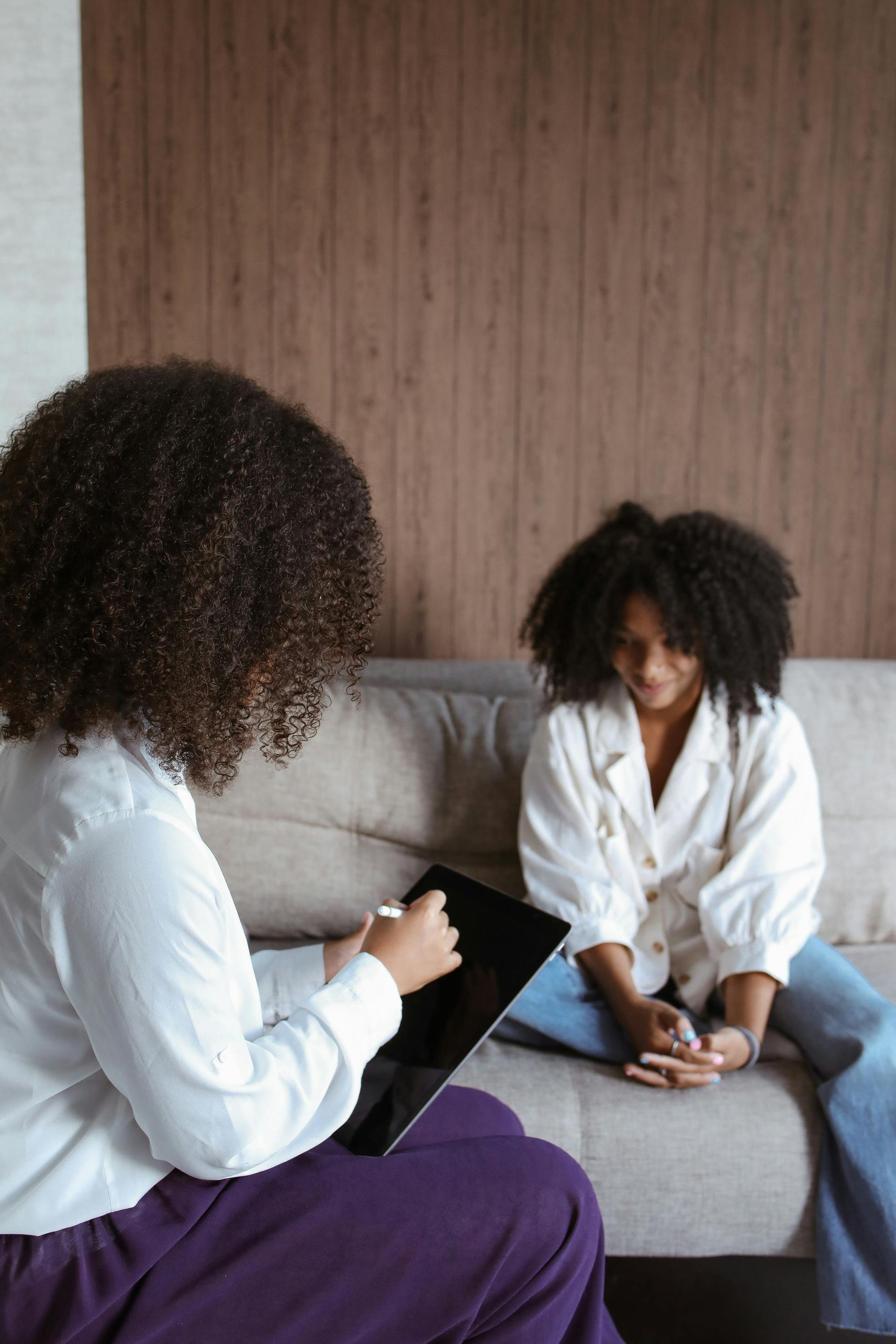
Having a therapist who understands your cultural and spiritual story changes everything. You need someone who can see beyond the surface, who recognizes what it means to be a high achieving Black Christian woman carrying invisible expectations.
Through our therapy for anxiety, you can begin to untangle the pressure to perform from your need to be at peace. Therapy becomes a sacred space to process the exhaustion that comes from always being composed, to explore how perfectionism is often a response to fear, and to learn tools that reconnect you with your body.
You might explore techniques like mindfulness and cognitive behavioral therapy, or gentle somatic work to help your body remember what safety feels like. The goal is not to erase your strength, but to make it sustainable.
A good therapist helps you learn how to rest without guilt, to say no without fear, and to breathe without apologizing for slowing down.
Workplace coping strategies for anxiety symptoms in women
The corporate world rewards constant motion, but healing asks for moments of stillness. And for Black women, healing also requires honest assessment: Is this anxiety coming from my patterns, or is this environment actually harmful? Sometimes what we call pressure or burnout are really anxiety symptoms in women being ignored for too long.
Sometimes the most radical workplace strategy is naming what you're navigating. Find other Black women in your organization, not just for networking, but for survival. Create sacred spaces where you can drop the code-switching, where you don't have to explain why that comment was offensive, where someone else already knows.
Set boundaries around emotional labor. You are not the DEI ambassador by default. You are not responsible for educating every well-meaning colleague about racism. You can lead with excellence without teaching people how to see your humanity.
And sometimes, the healthiest choice is recognizing that no amount of personal coping will fix a structurally toxic environment. Your anxiety might be telling you the truth: this space isn't safe. Listen to it.
Spiritual grounding
Faith for Black women isn't just Sunday morning. It's the spirituals our ancestors sang in fields, the prayers whispered in kitchens, the knowing that God sees us even when the world refuses to. It's finding sacred resistance in rest, because the world taught us our value was in our labor.
Your spiritual grounding isn't about productivity. It's about remembering that you are God's beloved, not the world's workhorse. That your worth isn't tied to how much you produce or how well you perform whiteness. That rest is an act of resistance against systems that profit from your exhaustion.
Begin your day not by checking messages but by checking in with your soul. Whisper a short prayer before the next meeting. Take a slow breath and remember that you are not doing this alone. God is in the quiet as much as in the work.
Combine spiritual practices with therapeutic tools to anchor your peace. Let meditation become an act of prayer. Let journaling become a dialogue with God. Let silence become worship.
If you need gentle guidance to stay grounded throughout the week, here are a few tools that can support your spiritual rhythm:
An emotional wellness app designed specifically for Black women, addressing the unique stressors we face. Exhale offers guided sessions, meditations, and tools that center your experience, not as an afterthought, but as the foundation. When you need support that actually understands code-switching fatigue, racial battle fatigue, and the weight of the Strong Black Woman narrative, this app meets you there.
Culturally relevant mindfulness for Black people, developed by researchers at Spelman College and backed by NIH-funded studies. This award-winning app offers meditations, sound healings, and breathing exercises in 15 minutes or less, because they know you've got things to do. It celebrates your spirituality, incorporates gratitude practices, and helps you reclaim peace without asking you to disconnect from your cultural identity or your connection to the divine.
A faith-based community offering online Bible studies, spiritual growth resources, and encouragement for busy women seeking to deepen their relationship with God. Founded by Christina, a Black woman who understands the challenge of staying spiritually full while managing the demands of everyday life. Every Monday, over 25,000 women start their week with biblical truth that reminds them they are God's Beloved, not defined by what they do, but by whose they are.
A devotional community centered on helping Black women stay anchored and rooted in relationship with God, themselves, and each other. Through weekly devotions, this space invites you into collective spiritual practice, reminding you that your faith journey isn't meant to be walked alone. It's a place where Black women can find spiritual grounding that speaks directly to our experience, our struggles, and our strength.
These resources are specifically for Black women, not adapted for us, but created with us in mind from the beginning.
Why anxiety in Black women often goes unseen
You've been taught that your value is in your endurance. That your strength is measured by how much you can carry without breaking. That rest is laziness and boundaries are selfishness.
Those are lies designed to keep you producing, performing, and exhausting yourself for systems that will replace you the moment you can't keep up.
Here's what's true: Your anxiety is not a flaw. It's a signal. Your body is telling you that the way you've been living is unsustainable. That the standards you're holding yourself to were never meant for your thriving, they were meant for your depletion.
You don't need to be stronger. You need to be held. You don't need better coping skills for toxic environments. You need spaces that actually honor your humanity.
Through anxiety therapy for women, you can learn to distinguish between anxiety that needs healing and anxiety that's telling you the truth. You can learn to stop performing and start living. You can find the kind of peace that doesn't require you to be smaller, quieter, or less Black.
You deserve more than survival. You deserve wholeness. And you don't have to earn it, you already are it.
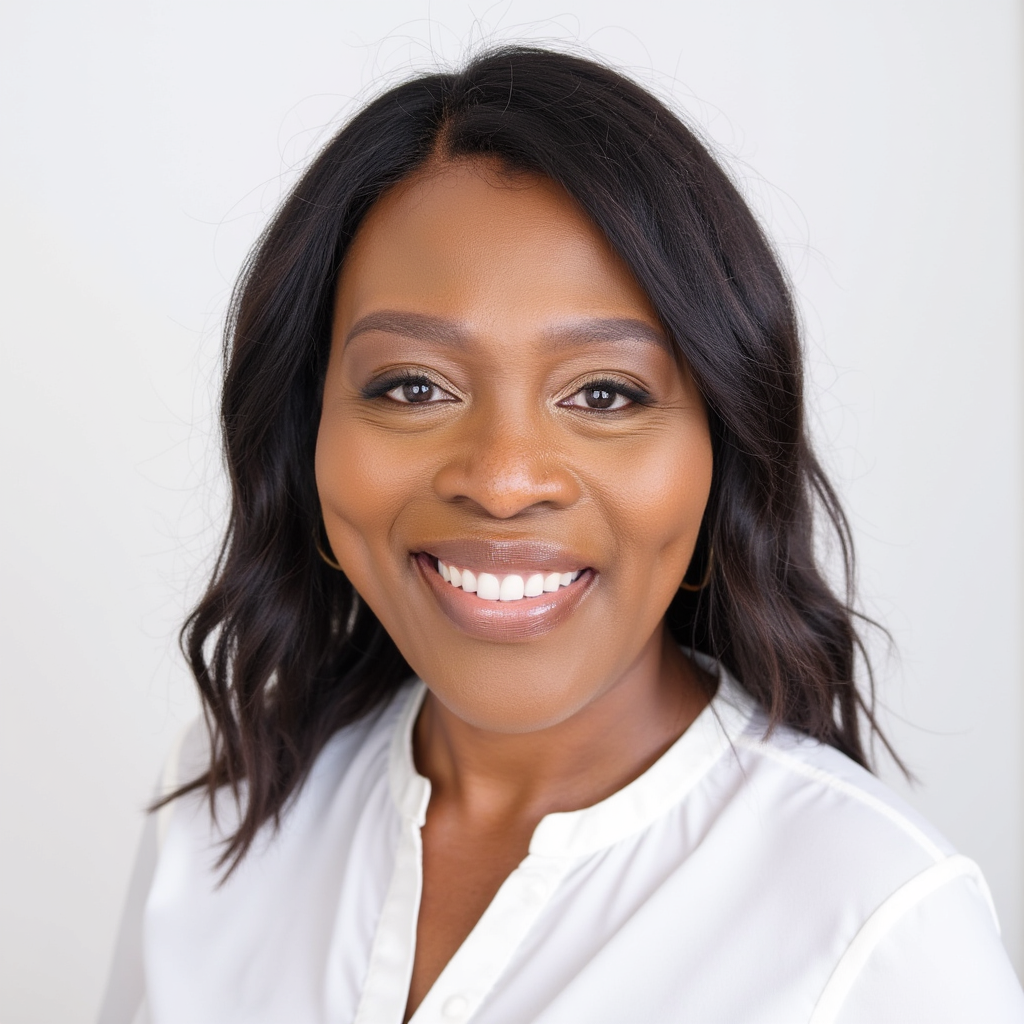
Hi! I'm Dr. J (Jackie Johnson)
Faith-rooted therapist & executive coach for high-achieving women of color
I help high-performing Black women and women of color release burnout, reconnect with their worth, and reclaim their voice—through soulful, faith-affirming therapy and trauma-informed coaching rooted in emotional safety and spiritual alignment.
Download my free guide