Anxiety Therapy for High-Achieving Black Women
If you're navigating anxiety, chronic overwhelm, or the particular exhaustion that comes from being the one who holds it all together — you're in the right place.
Anxiety in high-achieving Black women often doesn't look like panic attacks or visible distress. It looks like hypervigilance masked as preparedness. Constant over-functioning disguised as reliability. A body that never fully powers down, even when there's nothing left to give.
I'm Dr. Jacquelyn Johnson — licensed psychologist and founder of Deeply Seen Psychological Services. I specialize in therapy for high-achieving Black women who are ready to understand what's underneath the anxiety and build a life that doesn't require running on empty.
What is anxiety therapy?
Anxiety therapy is a supportive space where you can slow down, feel your feelings safely, and explore the root causes of your anxious thoughts and patterns. For many high-achieving black women, anxiety shows up not just as racing thoughts but as tight chests, insomnia, hypervigilance, people-pleasing, and chronic tension.
Anxiety doesn’t mean you’re weak or broken it means your body has been in overdrive for too long. I use a combination of somatic awareness, nervous system regulation, and deep emotional attunement so that you can stop overthinking and start living more freely.
Most common symptoms of anxiety:
- Chronic overthinking or spiraling thoughts that make it hard to focus
- Physical symptoms like chest tightness, jaw clenching, or difficulty sleeping
- Constantly feeling “on edge” or alert, even in safe situations
- Difficulty relaxing or enjoying the present moment
- People-pleasing, perfectionism, or fear of letting others down
- Feeling emotionally overwhelmed, exhausted, or disconnected from yourself
How do I know if I have anxiety?
If you’re wondering whether what you’re feeling is “just stress” or something more, try asking yourself:
- Do I feel like I can never fully relax, even when I try?
- Do I often replay conversations or future scenarios in my mind?
- Do I experience physical tension that doesn’t go away, even with rest?
- Do I avoid things I actually want to do because they feel “too much”?
- Do I feel like I’m managing everything on the outside, but falling apart inside?
If you said yes to any of these, anxiety therapy can help you explore what’s underneath the surface—and how to shift it.
How I treat anxiety
Licensed psychologist & coach for high-achieving Black women
I specialize in working with Black women who feel like they're carrying too much — the one who holds it together for everyone else while quietly coming undone inside. You don't have to keep pushing. Therapy is where you finally get to put it down.
What topics can we talk about in therapy for anxiety?
- Learning to slow down and regulate your nervous system
- Exploring the root of your overwhelm and people-pleasing
- Processing grief, trauma, or past emotional experiences
- Reclaiming your voice, boundaries, and sense of self
- Navigating burnout and making space for rest
- Developing emotional resilience and self-trust
Ready to get started?
01
Clarify what’s no longer working
We start by slowing down the pattern — the hypervigilance, the over-functioning, the body that never gets to rest. You don't have to have the answers yet. You just have to be willing to look honestly at what's been running the show.
02
Reclaim your voice and your needs
Together we untangle the internalized narratives that say you have to be strong, available, and self-sufficient to be worthy. This is where you practice something that may feel unfamiliar: honoring what you actually need without apology.
03
Rebuild from the inside out
As healing unfolds, you'll develop a different relationship with your nervous system and yourself. You'll leave with tools that hold, rhythms that restore you, and a clearer sense of what your life looks like when anxiety isn't running it.
Anxiety therapy for high-achieving black women

I specialize in working with women who feel like they’re carrying too much. Whether you’re an executive, entrepreneur, or someone who’s always held it together for everyone else. I see you.
You don’t have to keep pushing. You deserve a space where you can be held, heard, and regulated. Therapy isn’t here to fix you it’s here to bring you back to yourself.
Tips & resources for coping with anxiety:
- Start your day with 3 deep belly breaths and a grounding ritual
- Keep a “trigger log” to notice patterns in your anxiety
- Use a body scan to check in when your thoughts are spiraling
- Set a daily “pause moment” to check in with yourself no fixing, just noticing what you feel and need in that moment.
- Choose one small thing each week to say “no” to

Hi! I'm Dr. J (Jackie Johnson)
Faith-rooted therapist & executive coach for high-achieving women of color
I help high-performing Black women and women of color release burnout, reconnect with their worth, and reclaim their voice—through soulful, faith-affirming therapy and trauma-informed coaching rooted in emotional safety and spiritual alignment.
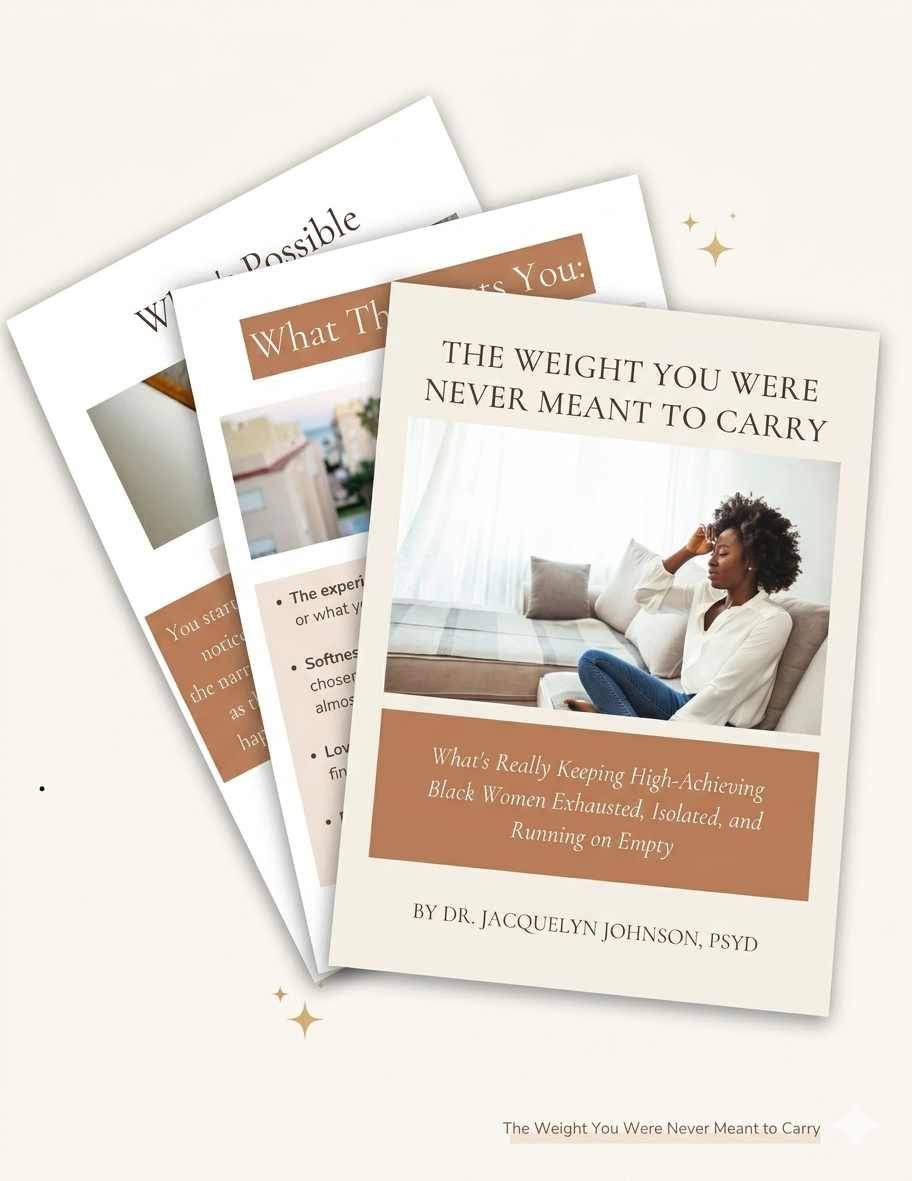
Book your session
If you're looking for therapy, sessions are $250 and held virtually for clients in California. Book directly below.
If what you're navigating feels less like a clinical concern and more like a pattern — the over-functioning, the inability to slow down, the sense that you've built your life around managing instead of living — coaching may be where to start. Dr. J offers the Clarity Session (75-minute, standalone) for focused work on a specific pattern, or The Reclamation, a 90-day container for deeper identity-level change.
Learn more and find the right fit.

FAQ
How does therapy help with anxiety?
Therapy offers a compassionate space to slow down and be deeply seen maybe for the first time in a while. Rather than just giving you tools to manage symptoms, it helps you understand why your anxiety exists and what it’s trying to protect you from. I use the power of the therapeutic relationship, parts work, and self-compassion approaches to support nervous system regulation, emotional release, and a sense of groundedness in your everyday life. Together, we’ll explore what’s beneath the spirals so you can stop coping and start healing.
What is the strongest natural anti-anxiety remedy?
The strongest remedy is the one that works in your body. There’s no universal fix, but I’ve seen how powerful body awareness, breathwork, and nervous system regulation can be especially when practiced consistently. Sometimes, it’s not about doing more, but about learning to truly listen to what your body is asking for. In session, I’ll guide you in discovering which natural practices actually support you—no generic formulas, no empty promises.
What is the best way to calm down anxiety?
One of the most effective ways to calm anxiety is to come back to your body especially when your thoughts feel out of control. That might mean pausing to name what’s happening, connecting to your breath, or simply noticing your feet on the floor. These small shifts send signals of safety to your nervous system. In therapy, we work with personalized practices that help you learn to regulate yourself more intuitively without having to shut down your emotions or push yourself harder.
Can I live a normal life with anxiety?
Yes, and more than that you can live a meaningful life with anxiety. Many of the women I work with have learned to relate to their anxiety with more curiosity and compassion, rather than fear or shame. With the right support, you can stop living in survival mode and start living from a more regulated, present, and self-aligned place. Anxiety might still visit, but it won’t run the show.
How often should you see a therapist for anxiety?
That depends on your current emotional load, your goals, and the kind of support you’re needing right now. Most clients begin with weekly sessions to create a consistent rhythm of safety and momentum. Over time, we adjust the frequency based on how you’re feeling the process is completely personalized. The goal is for therapy to support you, not overwhelm you.
Good Faith Estimate (No Surprises Act)
This Good Faith Estimate shows the costs of services that are reasonably expected for the expected services to address your mental health care needs. The estimate is based on the information known to us when we did the estimate.
The Good Faith Estimate does not include any unknown or unexpected costs that may arise during treatment. You could be charged more if complications or special circumstances occur. If this happens, federal law allows you to dispute (appeal) the bill.
If you are billed for more than this Good Faith Estimate, you have the right to dispute the bill.
You may contact the contact listed above if billed charges are higher than the Good Faith Estimate. You can request an update to the bill to match the Good Faith Estimate, ask to negotiate the bill, or ask if there is financial assistance available.
You may also start a dispute resolution process with the U.S. Department of Health and Human Services (HHS). If you choose to use the dispute resolution process, you must start the dispute process within 120 calendar days (about 4 months) of the date on the original bill.
There is a $25 fee to use the dispute process. If the agency reviewing your dispute agrees with you, you will have to pay the price on this Good Faith Estimate. If the agency disagrees with you and agrees with the health care provider or facility, you will have to pay the higher amount.
To learn more and get a form to start the process, go to:
www.cms.gov/nosurprises or call CMS at 1-800-985-3059.
For questions or more information about your right to a Good Faith Estimate or the dispute process, visit www.cms.gov/nosurprises or call CMS at 1-800-985-3059 .
This Good Faith Estimate is not a contract. It does not obligate you to accept the services listed above.